TIMELINE
This timeline details events relating to the San Francisco Police Department’s (SFPD) practices in carrying out traffic stops. We wanted to understand how external factors such as police department leadership, economic outlook, historical events, and more could have affected traffic stop outcomes and changes in police stop trends. The timeline begins in 2001, when traffic stops were first officially recorded, and highlights any major changes in the SFPD up to the end of 2016 — the last year of traffic stop data used in our analysis.
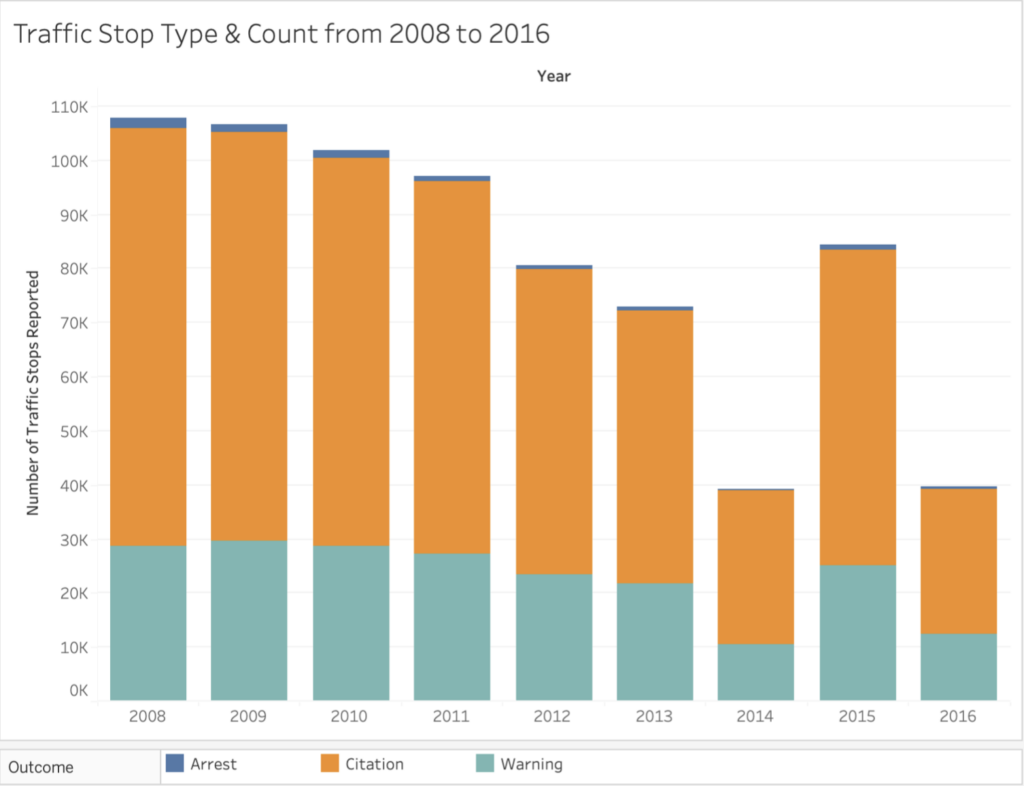
As pictured in this bar chart from our dataset, the number of traffic stops from 2008 to 2016 has generally decreased. We were curious to see how different factors could have affected this, leading to our analysis of SFPD before and during our dataset time range. Firstly, we found no major changes in department funding or allocation, showing that SFPD’s budget did not affect this decrease. Secondly, the sharpest decline in traffic stop count occurred during the tenure of Chief Police Officer Greg Suhr, however, he did not make any changes to traffic stop recording practices. Thirdly, at the end of 2015, the type of information recorded during traffic stops was elaborated upon to include more detailed demographics of the person who was pulled over. This would not have led to the spike in traffic stop count in 2015, however, as it did not affect police patrol patterns and would have been put into effect too late to impact the count. Fourth and finally, The Great Recession led to a decrease in police employment exacerbated by the unsuccessful Deferred Retirement Option Program and an already understaffed police department. These factors may suggest the decrease in traffic stops recorded is simply due to a decrease in officers on patrol. Further evidence would be needed to make a definitive claim.
Additionally, we believe it is important to point out that the SFPD was investigated by the Department of Justice in 2016. This investigation focused on the San Francisco Department’s ability to properly carry out its responsibilities. This shows that certain questions were raised on how the SFPD operates and provides a valuable external perspective on the human component of the agency’s work. These occurrences mentioned in the timeline provide a better background to our analysis and help us understand what factors may have been at play beyond the information in our dataset.